An Exclusive Interview With Stephan Kaluza | FROM DUST TO BLOOM
Solo Exhibition | JD MALAT GALLERY DUBAI
17 September – 31 October 2026
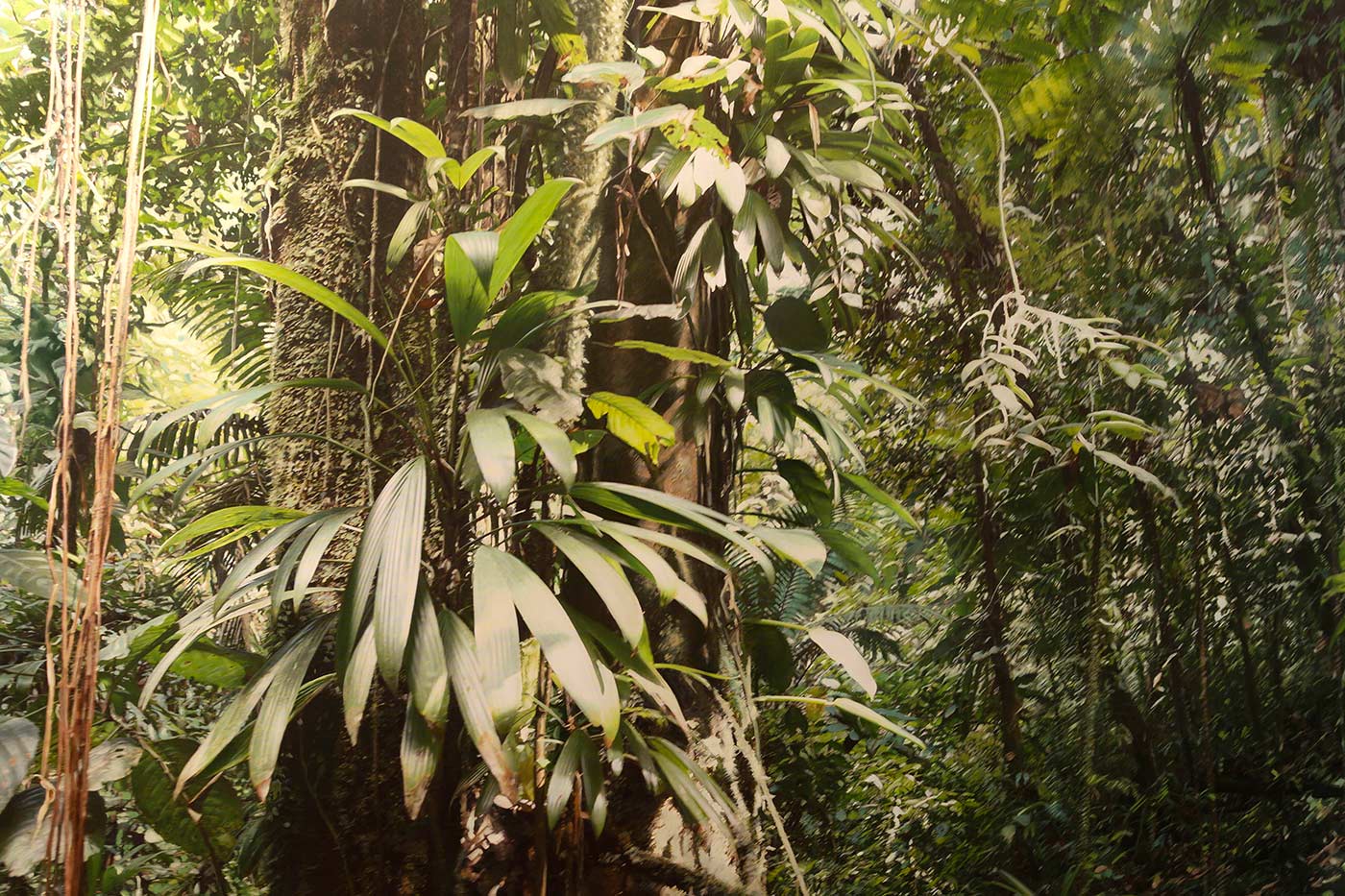
Drawing on nature as a recurring source of inspiration, Kaluza explores landscapes, forests and other natural environments through both hyper-realistic and abstract painting. Across these approaches, nature appears not as something fixed, but as a subject in continual transformation.
JD Malat Gallery is pleased to present FROM DUST TO BLOOM, a solo exhibition by German artist Stephan Kaluza. Drawing on nature as a recurring source of inspiration, Kaluza explores landscapes, forests and other natural environments through both hyper-realistic and abstract painting. Across these approaches, nature appears not as something fixed, but as a subject in continual transformation.
In the Transit series, the works initially appear as highly precise depictions of a seemingly intact world. Gradually, they become more ambiguous; disturbances enter the image, forms begin to shift, and the distinction between an observed place and an imagined one becomes increasingly difficult to maintain.
The viewer’s experience of nature’s apparent beauty, captured in a seemingly timeless present, is sharply challenged by sudden, sweeping distortion. This tension lies at the heart of The Disappeared, Kaluza’s ongoing body of work. Drawing together references from locations around the world, Kaluza constructs hyper-real natural settings. These transcriptive montages invite viewers to observe nature closely while simultaneously confronting our dislocation from it.
Alongside these realistic paintings are works from the Sunset series, in which the same motifs become reduced, fragmented, and progressively dissolved. The kaleidoscope of diverse hues, scents, and rapid movements of an intact environment is disassembled into its constituent parts. The abstract image emerges from the realistic depiction, as visible reality gradually loses its fixed nature.
This transient passage points towards what may already be disappearing; nature increasingly shaped, controlled, or damaged by human intervention. What initially appears as familiar reality transforms into an autonomous, nearly abstract visual world.
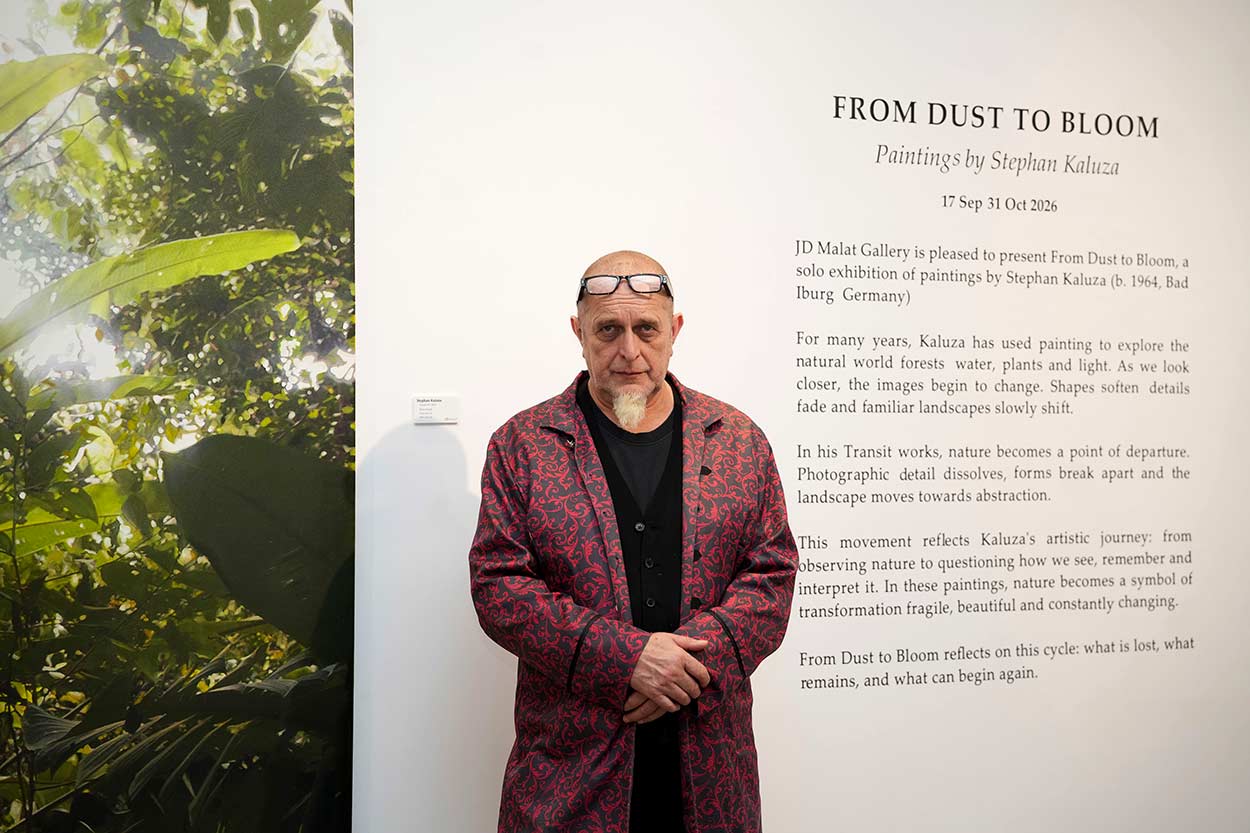
Stephan Kaluza . From Dust to Bloom at the JD Malat Gallery, Dubai.
© All rights reserved.
Stephan Kaluza
“The abstract works are not a contradiction to the photorealistic paintings; rather, they are an interpretation and, at the same time, a further development of the same motif. I like to think in metamorphoses, in the constant temporal transformation of one and the same thing.”
– Stephan Kaluza
Born in Bad Iburg, Germany, in 1964, Stephan Kaluza has developed a remarkably multidisciplinary artistic practice spanning painting, photography, literature, and performance. He studied at the Peter Behrens School of Arts, the Kunstakademie Düsseldorf, and Heinrich Heine University Düsseldorf, and has exhibited internationally for more than two decades. His work has been presented at institutions including the Pushkin Museum in St. Petersburg, Ludwig Museum Koblenz, Osthaus Museum Hagen, Istanbul Modern, Gwangju Museum of Modern Art, Museum of the Seam in Jerusalem, and Zendai Museum of Modern Art in Shanghai, among many others. His paintings and projects are held in significant public and private collections, including Museum Voorlinden, Museum Kunstpalast Düsseldorf, the François Pinault collection, Museum of the Seam Jerusalem, Arp Museum Remagen, and Gwangju Museum of Art. His career has also been recognized with prizes including the George Konell Prize of the City of Wiesbaden, the Carl Lauterbach Prize, and the Kunstpreis of the FBZ Bochum.
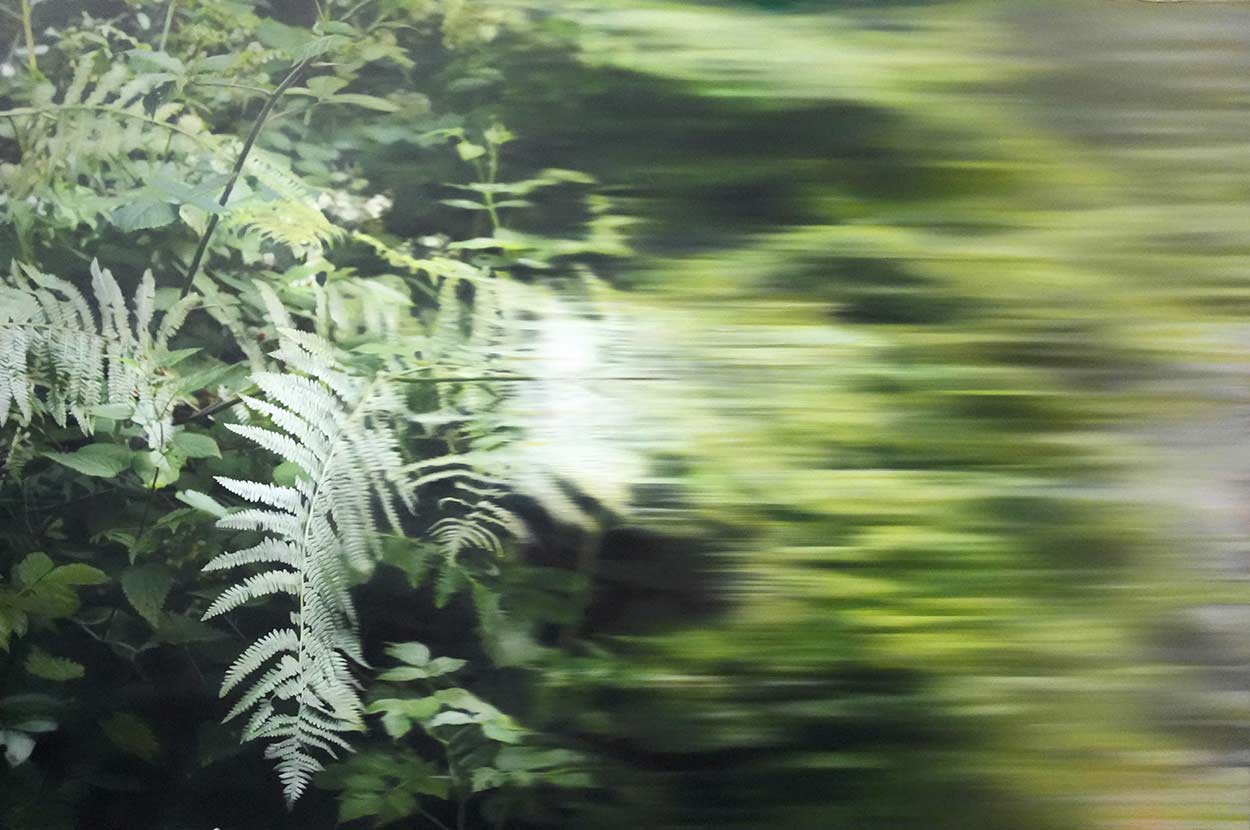
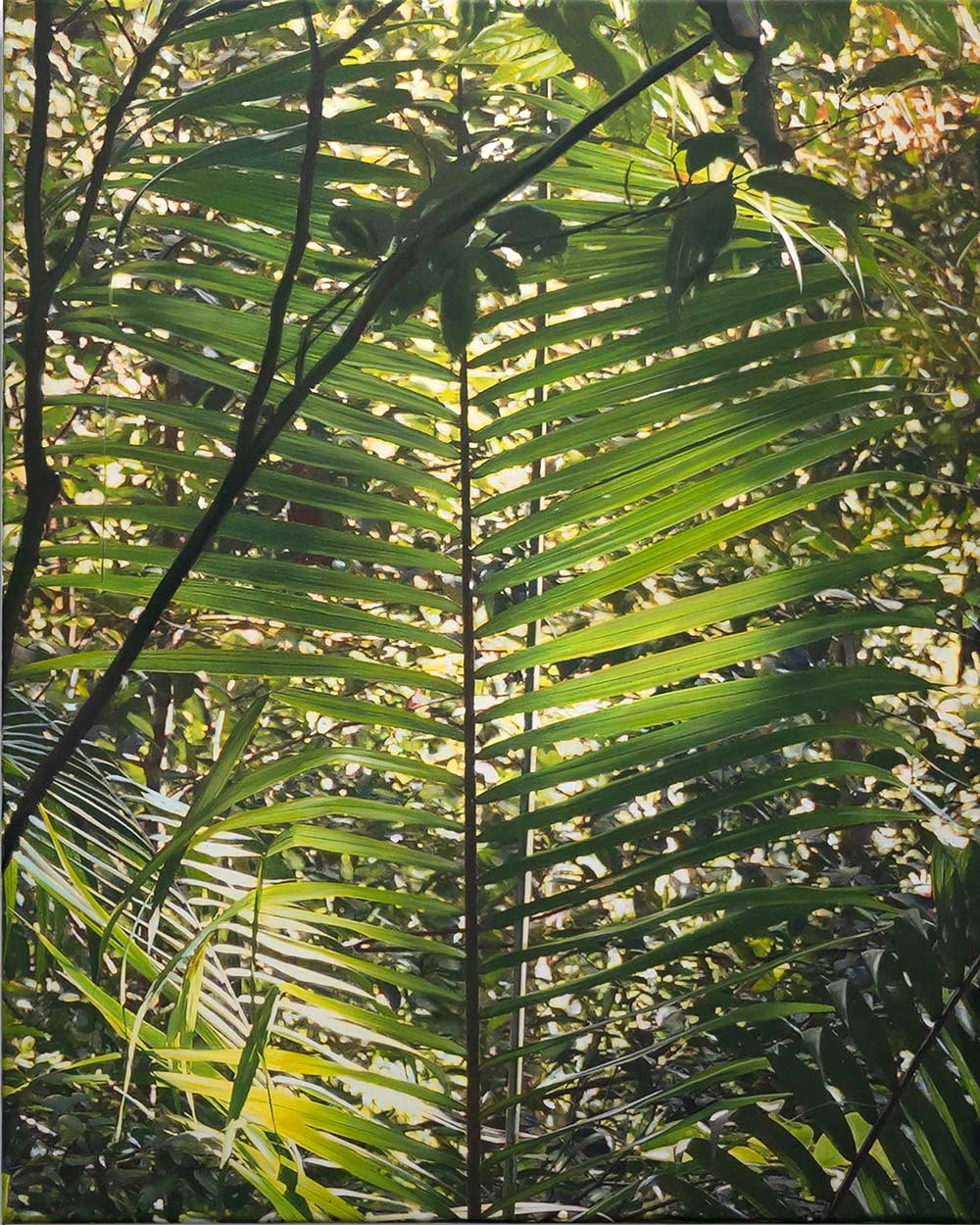
Oil on canvas, 76 x 102 cm
Erin Hanson © All rights reserved
An Exclusive Interview With Stephan Kaluza | FROM DUST TO BLOOM
“For me, that principle is time: the decay of nature in painting, the simultaneity of seeing in photography; it is also the primary theme in literature. Today, one cannot practice art without reflecting on the past, present, and future. We are mortal beings; we must do this.“
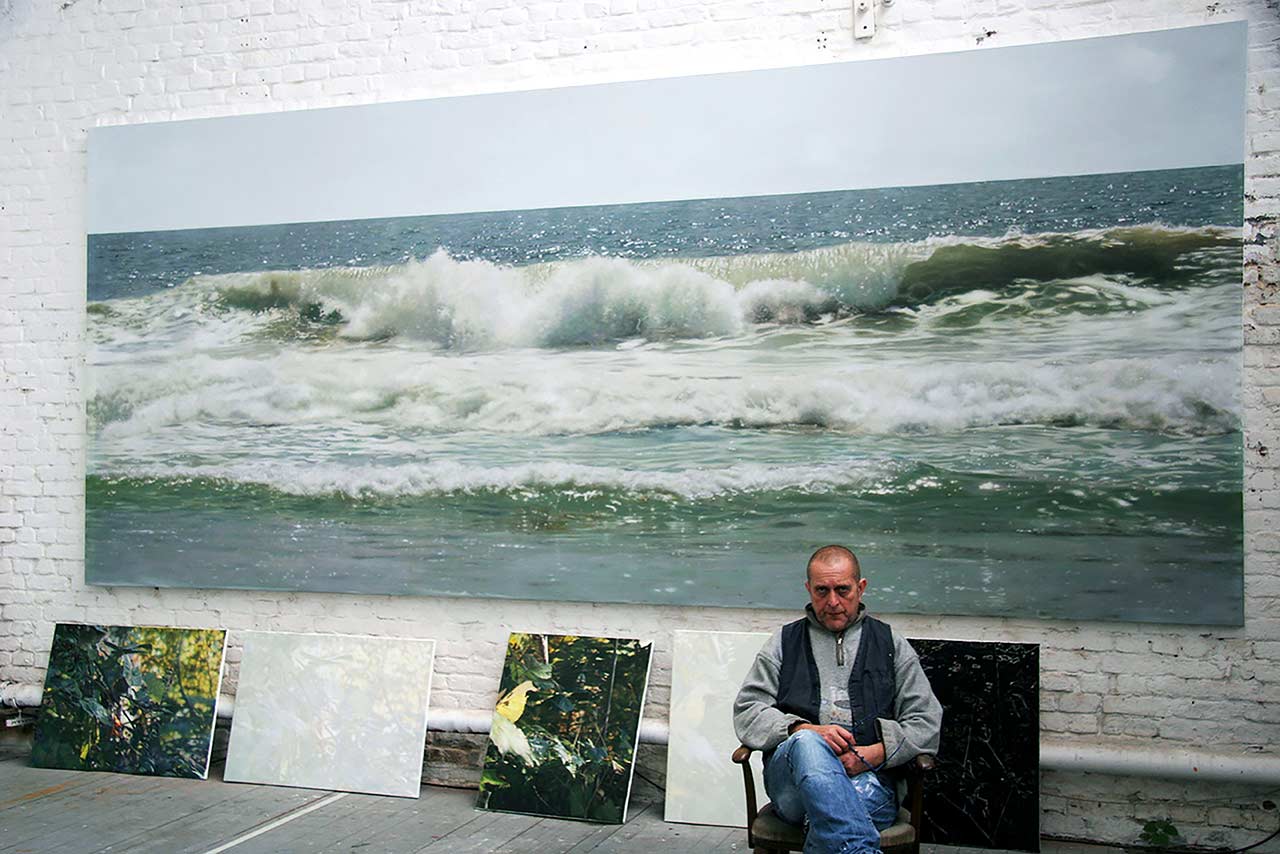
© All rights reserved.
Art Market Magazine: Your artistic practice encompasses painting, photography, writing, and other forms of artistic expression. Looking back at the beginning of your career, what first drew you to such a multidisciplinary way of working?
Stephan Kaluza: I think my interest in temporal sequences is the common thread connecting the series. In 2006, I walked the Rhine from its source to its mouth, about 1,600 kilometers. Along the way, I seamlessly photographed the opposite bank and assembled these 50,000 photos into one long continuous strip of images.
The Rhine is therefore compressed for human vision; in a certain sense, it becomes visible and experiential in this way. Days and seasons are thus encapsulated within a single long image. This is primarily an engagement with time and the history of images, reflected in photography, painting, and literature.
Art Market Magazine: You studied art and art history before continuing your studies in philosophy at Heinrich Heine University Düsseldorf. How have these different fields influenced the way you create art and your perspective on the world around you?
Stephan Kaluza: At German art academies, there is always a very strong emphasis on the deeper meaning and content of an image as a concept. My engagement with philosophy has reinforced this even further. Very conceptually, meaning in the universal application of a principle across all media. For me, that principle is time: the decay of nature in painting, the simultaneity of seeing in photography; it is also the primary theme in literature. Today, one cannot practice art without reflecting on the past, present, and future. We are mortal beings; we must do this.
Art Market Magazine: Nature and landscapes have remained a recurring subject throughout your artistic journey across all your mediums, including photography. What about the natural world first made you want to explore it through painting?
Stephan Kaluza: I am deeply interested in geological eras, especially the Devonian and Carboniferous periods, when nature in its infancy produced the first global forests. Looking at them is always a look back in time that no contemporary medium can capture. Perhaps, however, painting offers a possibility by allowing me to construct ancient rainforests and depict landscapes that do not exist in this way. For this reason, I regularly travel to the world’s oldest forests, such as those in northeastern Australia.
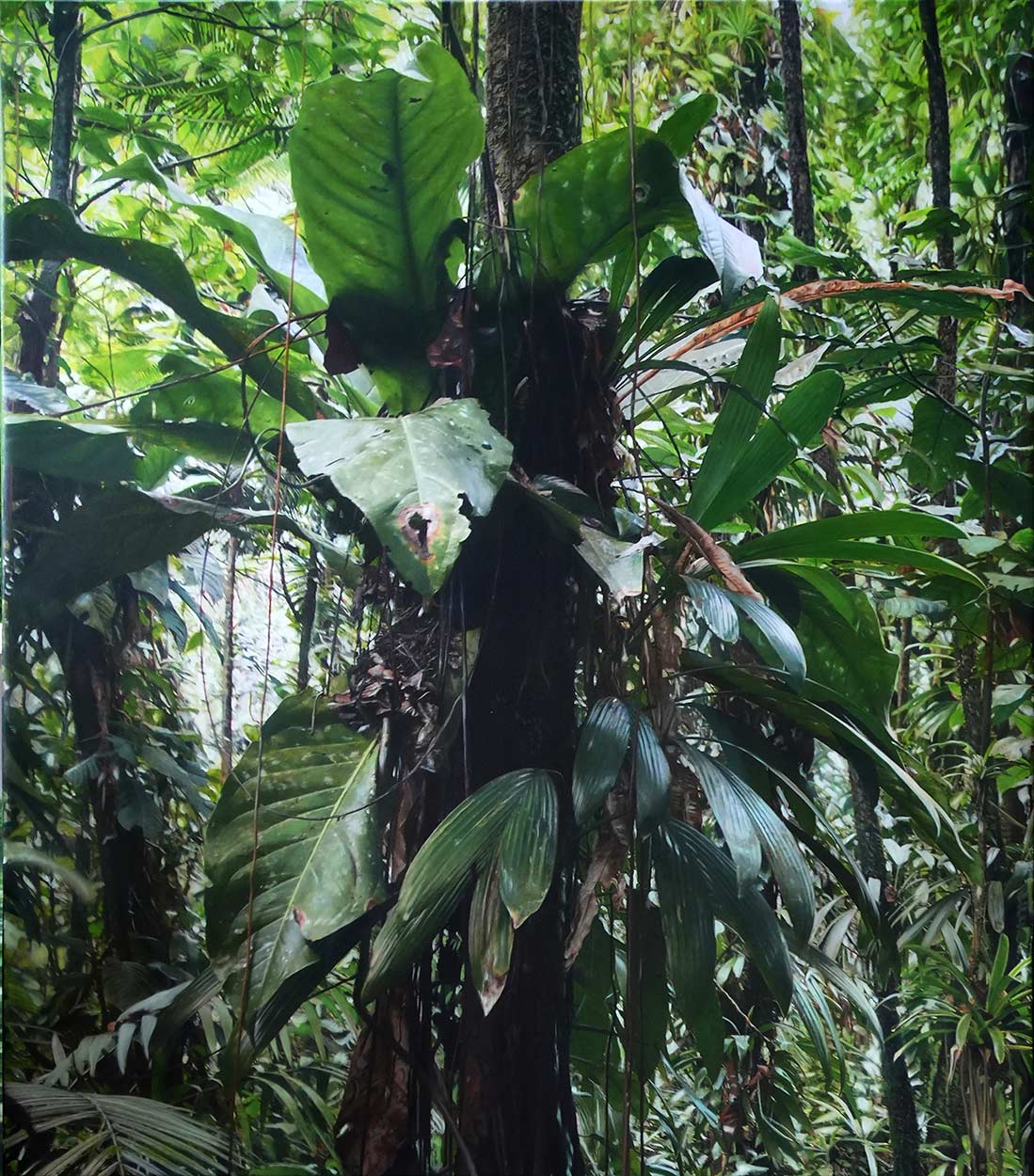
Oil on canvas, 130 × 110 cm
Stephan Kaluza © All rights reserved.
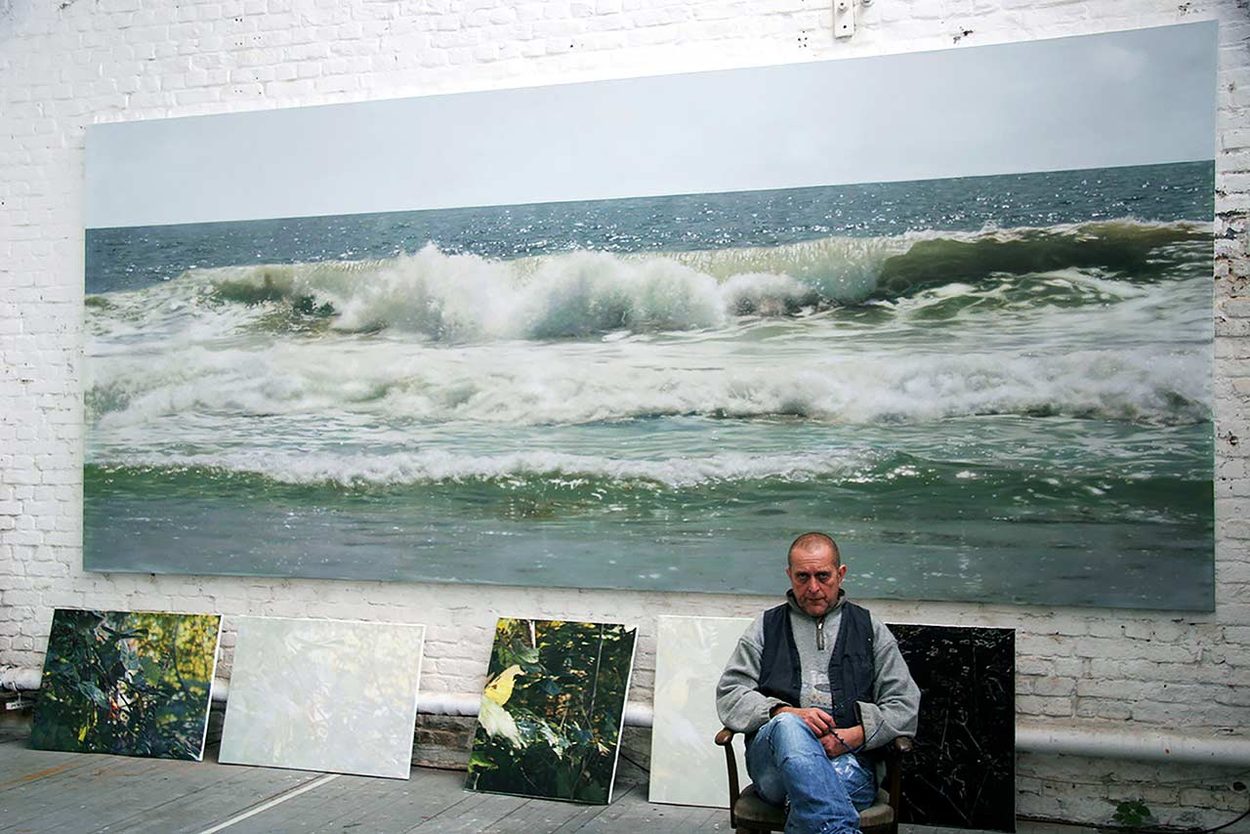
Art Market Magazine: Some of your landscapes carry very personal memories beneath their seemingly objective surfaces. In Transit, for example, you have painted a seascape connected to an experience in which you nearly drowned. How important is personal memory in determining what lies beneath the surface of an apparently neutral image?
Stephan Kaluza: It was about ten years ago that I almost drowned in a current off the Brazilian Atlantic coast, which carried me far out to sea—an area well known for its sharks. Later, I returned just to see the waves there once again. I then painted them, over and over, the exact same stretch of beach. Painting here is a tool to comprehend things that one cannot otherwise understand; this undoubtedly includes one’s own death. Paint fixes the memory, bringing it from the incomprehensible into the comprehensible. Consequently, these paintings look very peaceful to someone who does not know what happened to me back then.
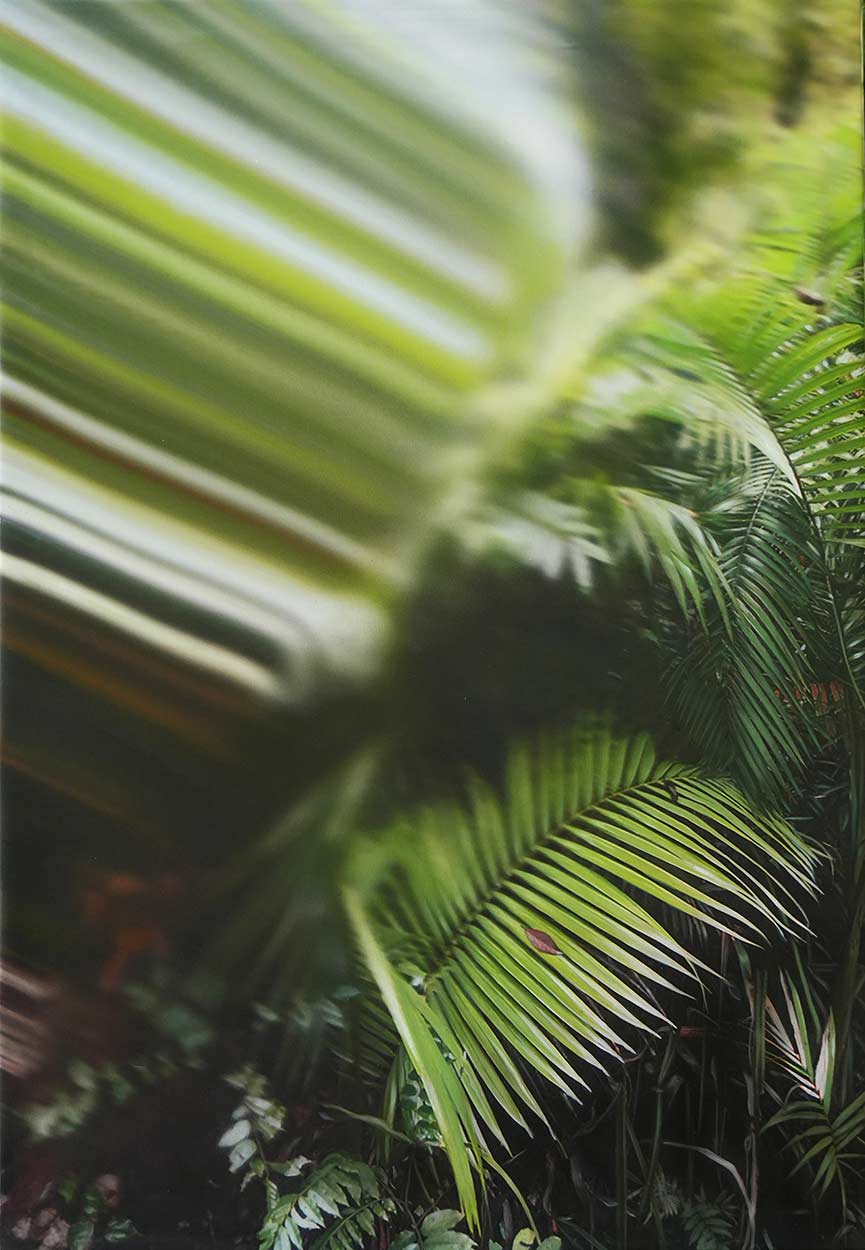
Oil on Canvas
130 x 90 cm 51 x 35.4 cm
(KAL011)
Stephan Kaluza © All rights reserved.
Art Market Magazine: One of the things that immediately fascinates us about your work is the extraordinary contrast between your highly precise, photorealistic paintings and your much more radical abstract works. How do you experience these two apparently opposite approaches within your own journey?
Stephan Kaluza: The abstract works are not a contradiction to the photorealistic paintings; rather, they are an interpretation and, at the same time, a further development of the same motif. I like to think in metamorphoses, in the constant temporal transformation of the same thing.
For the Rainforest series, I dragged the still-wet paint horizontally across the realistically painted canvas with brushes until only fields of color remained and nothing realistic could be recognized anymore. Seen this way, they are not abstract paintings, but further developed realistic ones. Realism and reality are two different things; the latter is not always visible; one must imagine it.
Art Market Magazine: Do you see photorealism and abstraction as two separate artistic languages, or as two stages of the same process? Can one ultimately lead naturally into the other?
Stephan Kaluza: For painting, it is a natural process in the brushstroke to place color and form side by side.
Only recognizability makes something appear realistic in the eye of the beholder—when they can categorize things and recognize them as objects of this world. To speak with Plato, one could also say—recognize them. For a painter, whether something is a representation or remains freely interpretative is basically just a minor movement of the brush. Creativity can do both, and I love to blend the two positions. On the one hand, there is the fascination of mimesis: recreating this world through painting and developing it further like a “creator”; on the other, deformation and dissolution. It is like a boy who first builds a tower with his toys, only to destroy and transform it again.
“It was about ten years ago that I almost drowned in a current off the Brazilian Atlantic coast, which carried me far out to sea—an area well known for its sharks. Later, I returned just to see the waves there once again. I then painted them, over and over, the exact same stretch of beach.“
© All rights reserved.
Art Market Magazine: In The Disappeared series, an image may initially appear to be a perfectly intact representation of nature, yet disturbances gradually enter the scene and undermine that sense of certainty. What philosophical idea lies behind this disappearance?
Stephan Kaluza: The Disappeared series shows an intermediate step of the blurring process described above, exactly as I find it in nature. Nature is constantly changing; something arises and passes away—that is the great game. But nothingness does not exist; there are merely altered states of matter; everything becomes something else. Yet with human intervention, the story is different. Humans interfere with the time of things, and global destruction has reached a speed we can no longer keep up with; diversity cannot recover, raw materials are irrevocably lost—that is a different quality altogether. The Disappeared describes this condition precisely: human time is causing the planet to collapse, and the world is not prepared for it.
“The title refers to the metamorphosis of the images described above, from precise objecthood to deformation. But it is entirely meant to be ambiguous.“
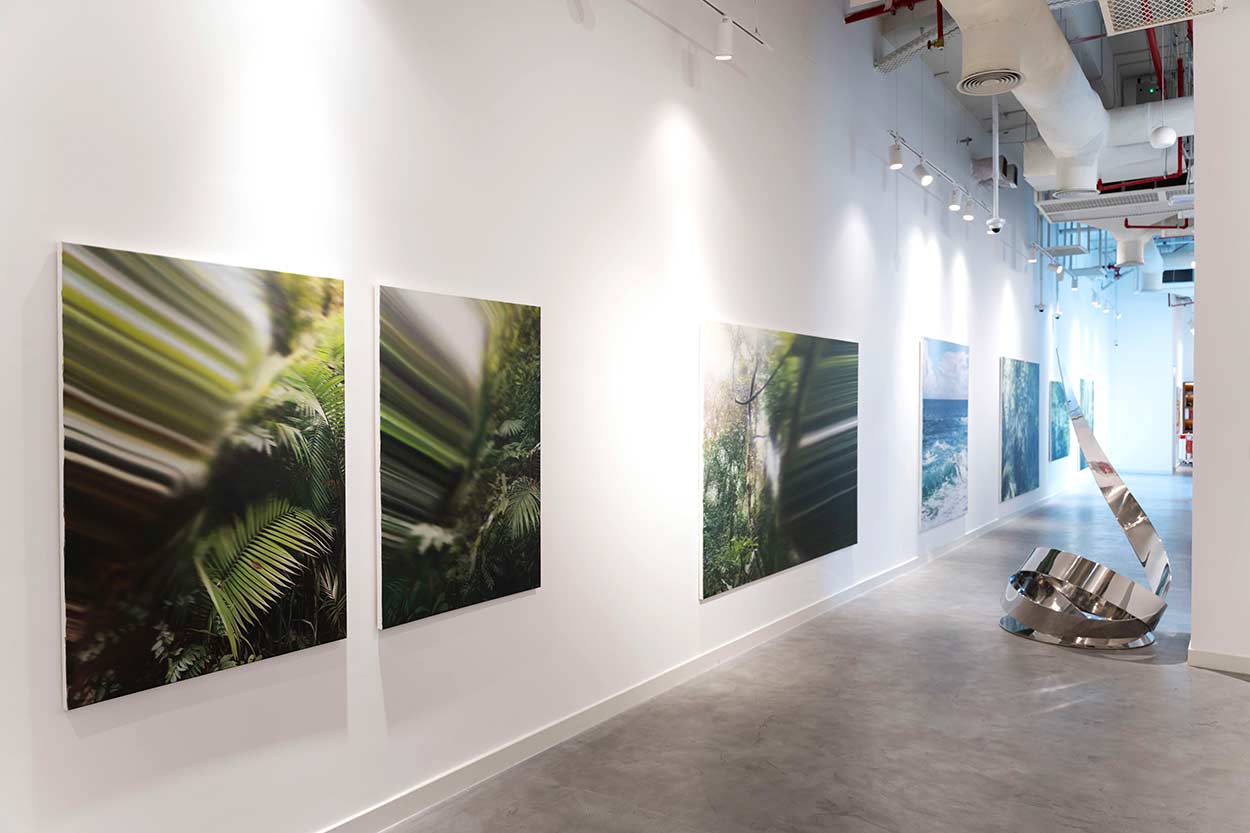
Stephan Kaluza . From Dust to Bloom at the JD Malat Gallery, Dubai.
© All rights reserved.
Art Market Magazine: Your Solo exhibition at JD Malat Gallery is titled From Dust to Bloom. What does this title mean to you, and what kind of transformation does it describe within the exhibition?
Stephan Kaluza: The title refers to the metamorphosis of the images described above, from precise objecthood to deformation. But it is entirely meant to be ambiguous. The landscape of modern-day Dubai has also experienced such a metamorphosis. One of the most modern metropolises in the world arose virtually out of the desert, like a blossom out of nothing.
Or like a man-made nature that has emerged here; that is fascinating. Because it shows the heights to which the human spirit has grown by now. Have we become equal to nature and creation, are we demiurgic, so that we can wrest a moment from life in the nunc stans?
Art Market Magazine: From Dust to Bloom brings together works from different series, including Transit, The Disappeared, and Sunset. What was important to you in bringing these bodies of work together in one exhibition? How do you see the relationship between them?
Stephan Kaluza: These series fit together chronologically in terms of their creation. Transit marked the beginning of constructed representations of nature; The Disappeared altered these images in parts as an intermediate step, and the triptych Sunset completely dissolves what can be realistically seen, breaking it down into components of color fields. But the Impact paintings must also be counted here; they show direct human intervention in nature.
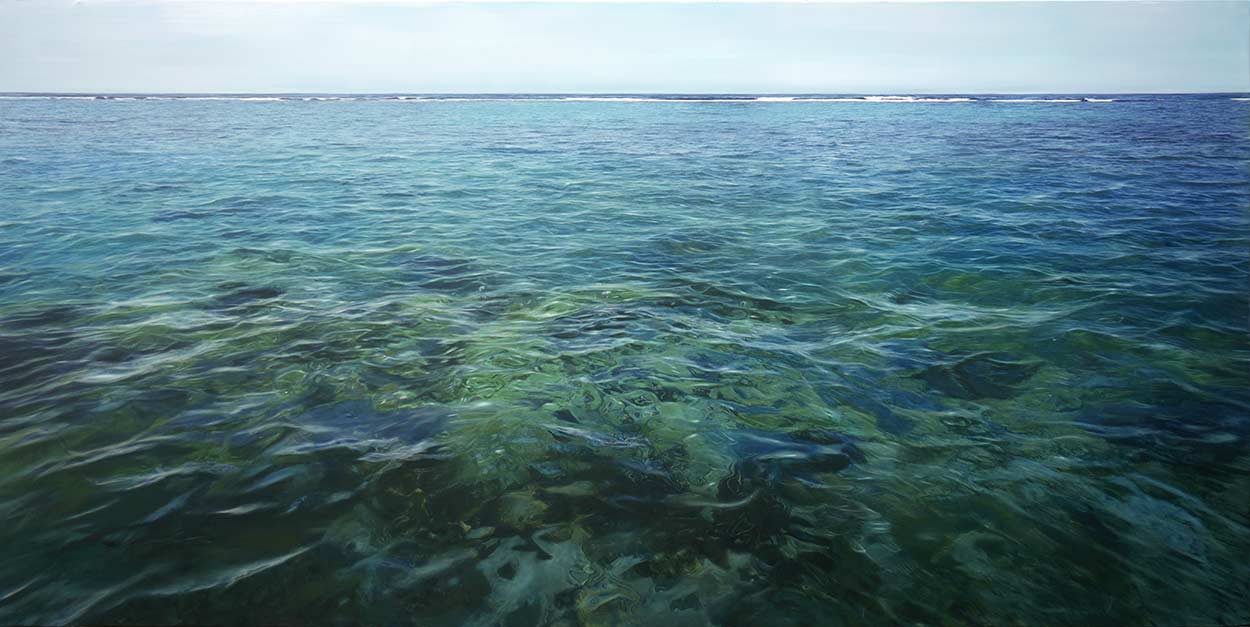
Oil on Canvas
200 x 400 cm 78.7 x 157.4 in
(KAL004)
Stephan Kaluza © All rights reserved.
Art Market Magazine: Across these works, beauty is often followed by disruption: what initially appears timeless and intact becomes unstable, fragmented, or transformed. Is this transformation primarily a reflection on nature itself, on human intervention, or on the way we have learned to perceive nature?
Stephan Kaluza: In Earth’s geological history, destruction and collapse are part of individual eras; five mass extinctions alone destroyed nearly all life on Earth. Climate change drove most of these events. So far, one might think that this is also normal today, except that human intervention in the climate differs significantly from previous history in nature: on the one hand, at a speed that has never existed before, and on the other hand, in a change that is absolute and does not happen over a long period of time.
But when you see how fragile we are in the face of natural disasters, you have to believe that we also suffer from overconfidence. We just don’t seem to know it.
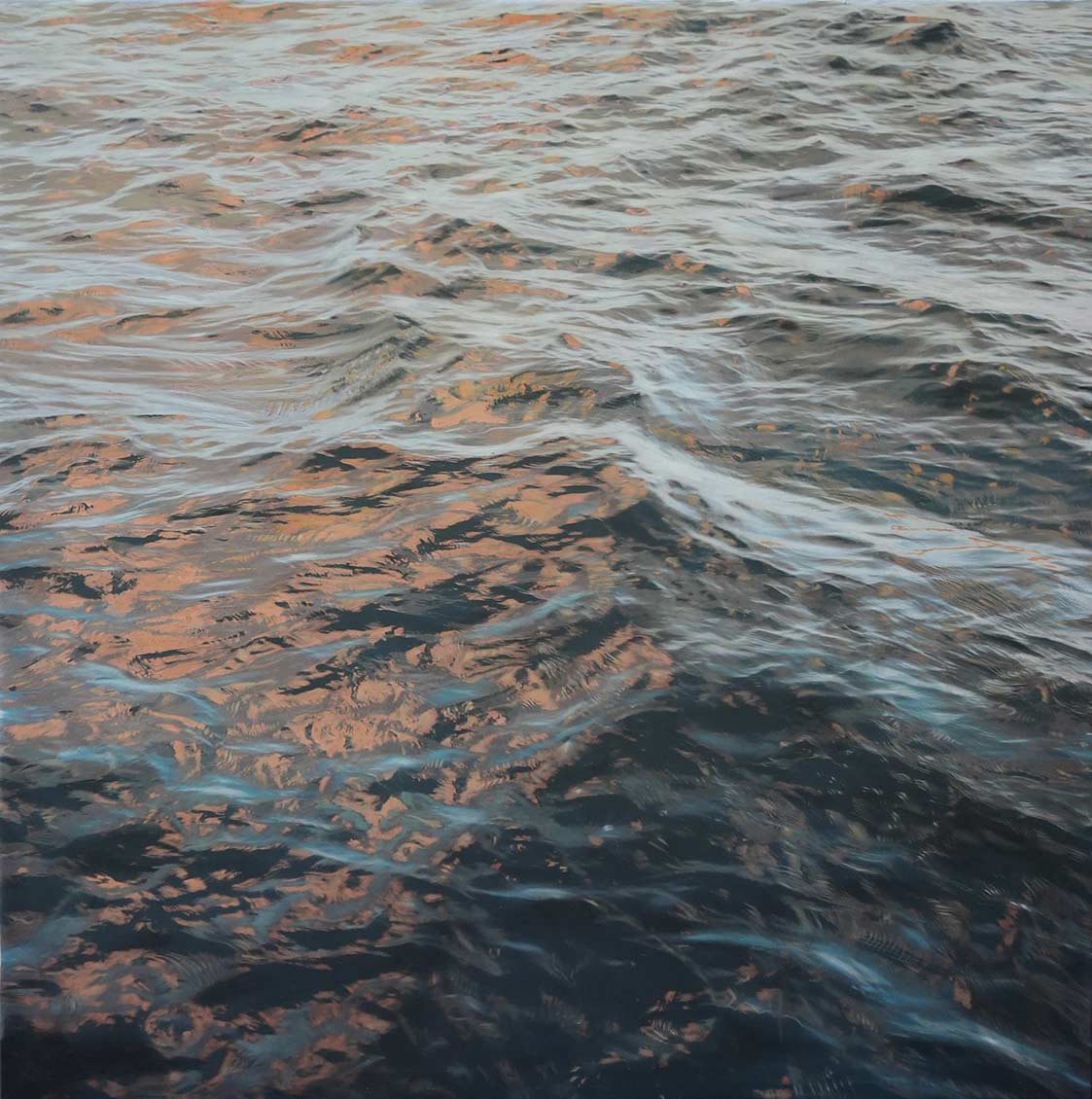
Oil on Canvas
120 x 120 cm 47.2 x 47.2 in
(KAL013)
Stephan Kaluza © All rights reserved.
Art Market Magazine: You have spoken about how painting can transform personal experience into something comprehensible. More broadly, how important is emotion and personal longing within your artistic practice?
Stephan Kaluza: Personal experiences are always a great driving force for a style of painting that is, after all, very emotional. Generally, this art does not consist only of concepts and reflection—all of that must be carried by emotionality. Painting, in general, is an investigation of one’s own longing (Sehnsucht). Every human being longs continuously; this is not a simple desire for something; longing is something higher that says a great deal about our nature. And last but not least, longing is also an engine that drives us forward in life; essentially, we want to achieve absolute harmony with our inner longing; that is why we are restless, that is why we love, that is why we paint.
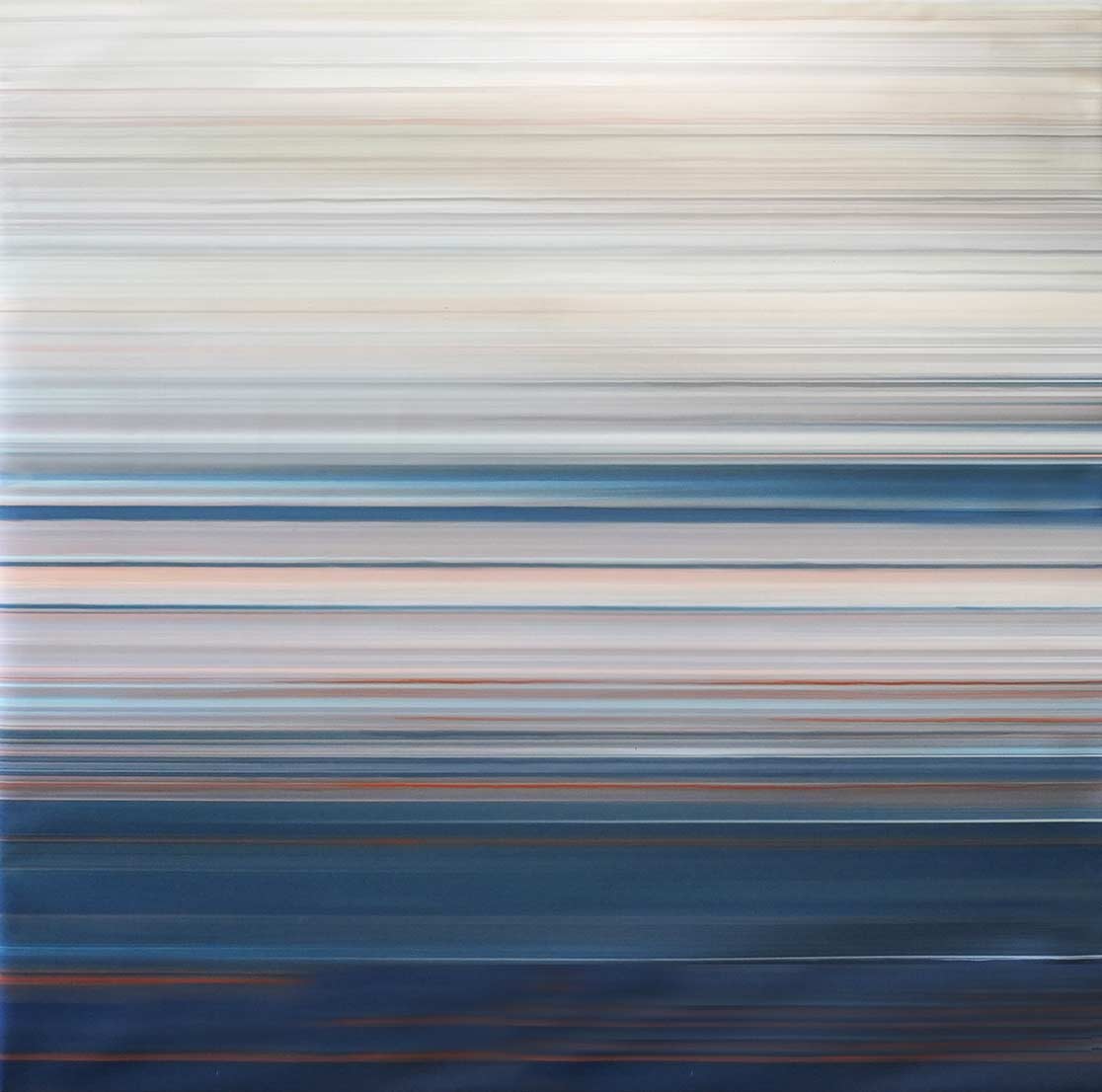
Oil on Canvas
47.2 x 47.2 in 120 x 120 cm
(KAL014)
Stephan Kaluza © All rights reserved.
Art Market Magazine: After decades of exploring the boundaries between reality and imagination, photorealism and abstraction, beauty and disturbance, what are you still searching for when you begin a new painting?
Stephan Kaluza: Every single painting is a new relationship and a new adventure, and you never know how it will end. A great tension that wants to be relaxed. A painting is always unpredictable and offers an eternal challenge; one cannot resist it.
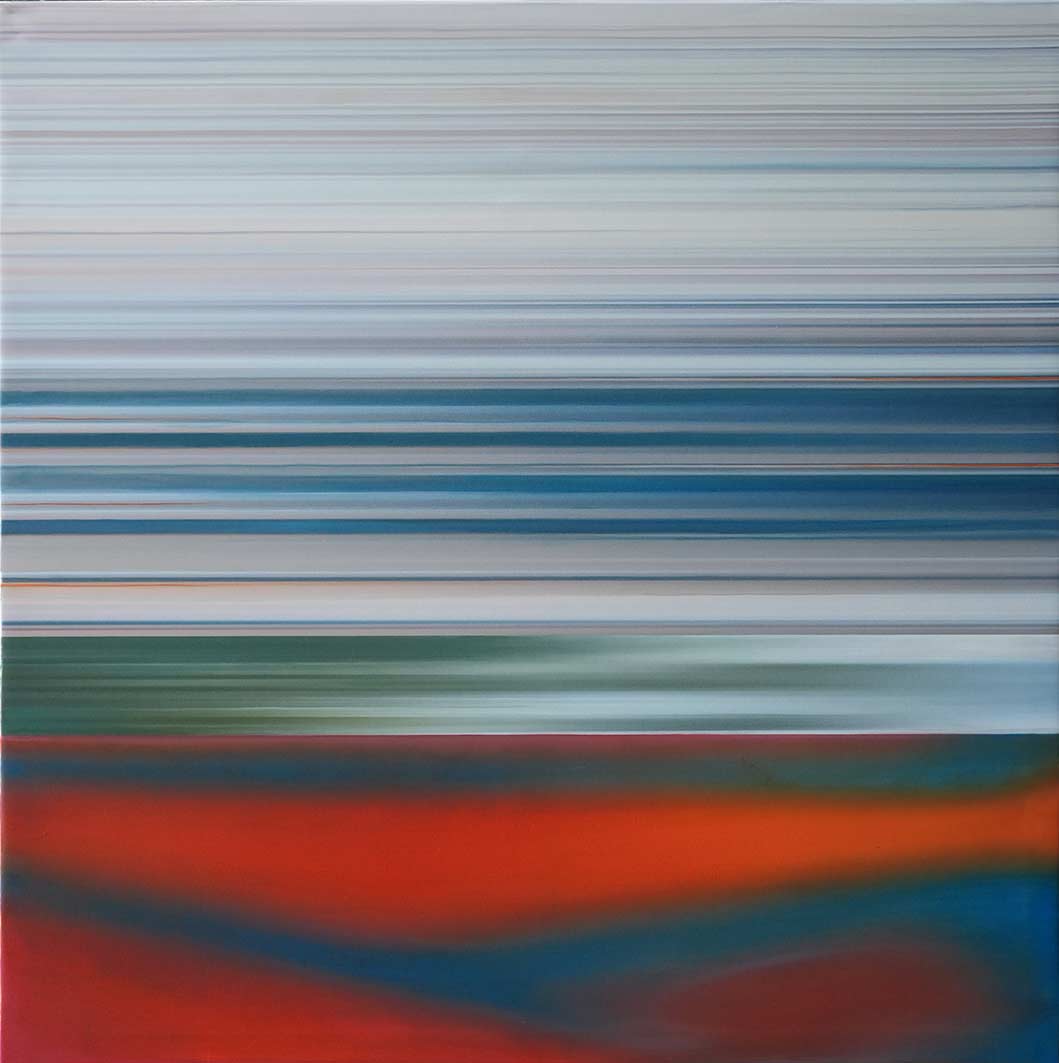
Oil on Canvas
47.2 x 47.2 in 120 x 120 cm
(KAL015)
Stephan Kaluza © All rights reserved.
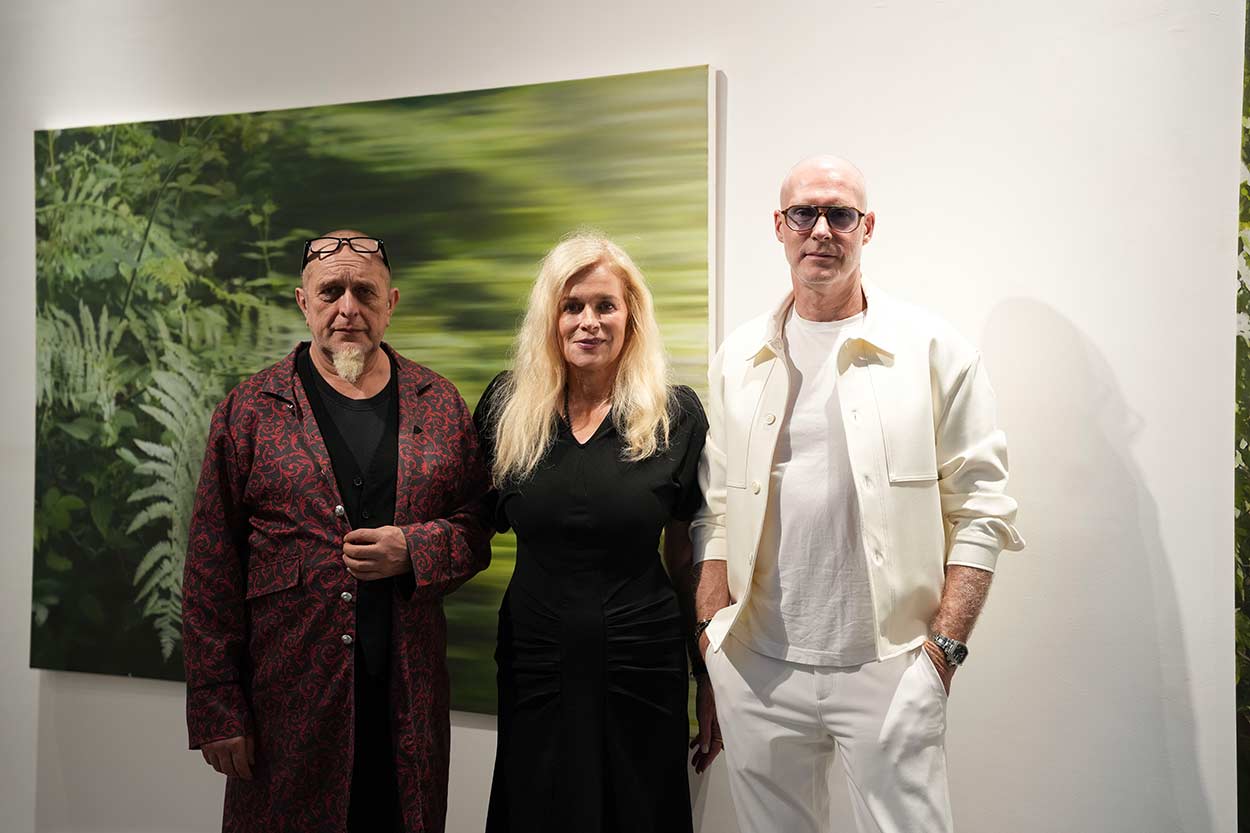
Stephan Kaluza . From Dust to Bloom at the JD Malat Gallery, Dubai.
© All rights reserved.
“For a painter, whether something is a representation or remains freely interpretative is basically just a minor movement of the brush. Creativity can do both, and I love to blend the two positions.”
– Stephan Kaluza
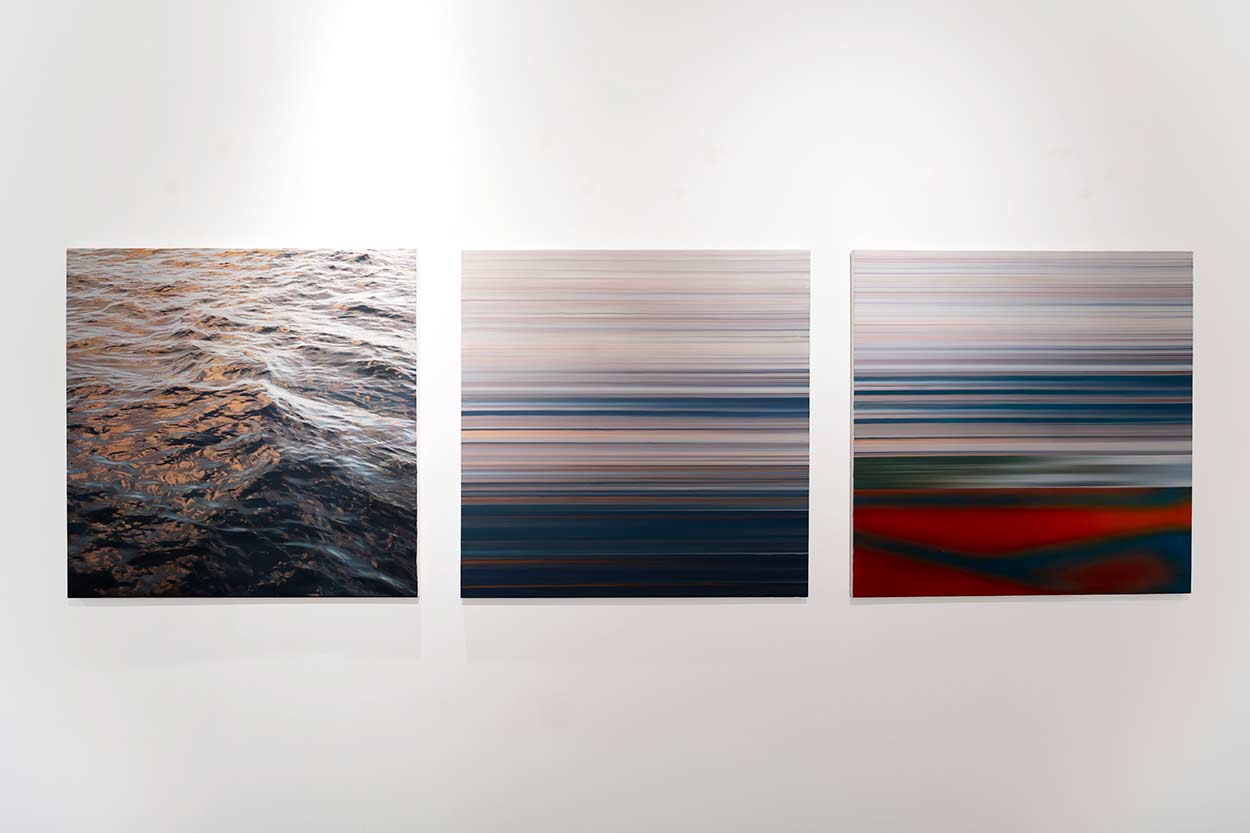
Stephan Kaluza . From Dust to Bloom at the JD Malat Gallery, Dubai.
© All rights reserved.
ABOUT JD MALAT GALLERY
Since its establishment in 2018, JD Malat Gallery has supported both established and emerging artists, with a focus on promoting underrepresented voices in the contemporary art world. Specializing in a diverse range of media, including sculpture and painting, the gallery represents international artists whose innovative work challenges and expands the boundaries of contemporary art. Located in the heart of Mayfair, London, and Downtown Dubai, JD Malat Gallery provides an international platform for its artists through a curated exhibition program and participation in art fairs globally. Founded by Jean-David Malat, a Paris-born art dealer and curator with over 20 years of industry experience, the gallery reflects his commitment to fostering creative expression across cultures and disciplines.
EXHIBITION DETAILS:
17 September – 31 October 2026
JD MALAT GALLERY DUBAI
Act 2 Tower, Ground Floor
Sheikh Mohammed Bin Rashid Blvd 13A, Downtown, Dubai – United Arab Emirates
Public Hours:
Monday – Sunday | 10:00 AM – 10:00 PM
Visit: www.jdmalat.com | @jdmalatgallery