The Whitney Museum Of American Art Presents
ROY LICHTENSTEIN: LIKE NEW
A BOLD RECONSIDERATION OF AN AMERICAN ICON FOR TODAY
Opening October 11, Roy Lichtenstein: Like New brings together over 130 works spanning six decades to reveal how Lichtenstein’s explorations of images, duplication, and mass culture feel urgent for the twenty-first century.
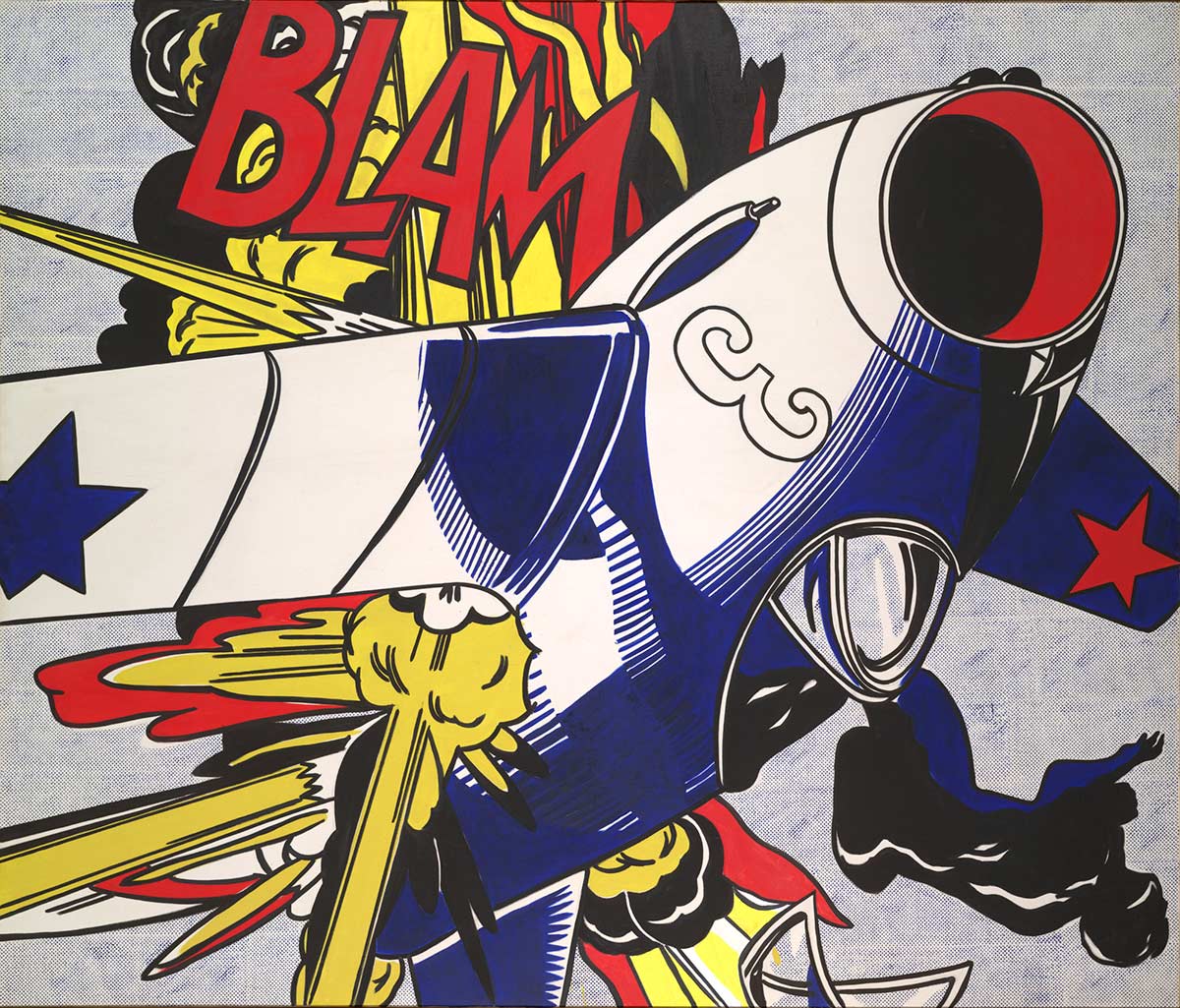
Blam, 1962 .
Oil on canvas,
68 × 80 in.
(172.7 × 203.2 cm) .
Yale University Art Gallery. ©
Estate of Roy Lichtenstein/DACS 2026
The Whitney Museum of American Art presents Roy Lichtenstein: Like New, opening October 11, 2026. This exhibition brings together over 130 works made from the early 1940s through the 1990s and offers a bold reconsideration of one of the defining artists of the Pop art movement and the twentieth century. Tracing Lichtenstein’s career-long investigation into duplication, perception, simulation, authorship, and image culture, Like New reveals an artist who understood that images are never fixed but instead continually copied, enlarged, circulated, and made new.
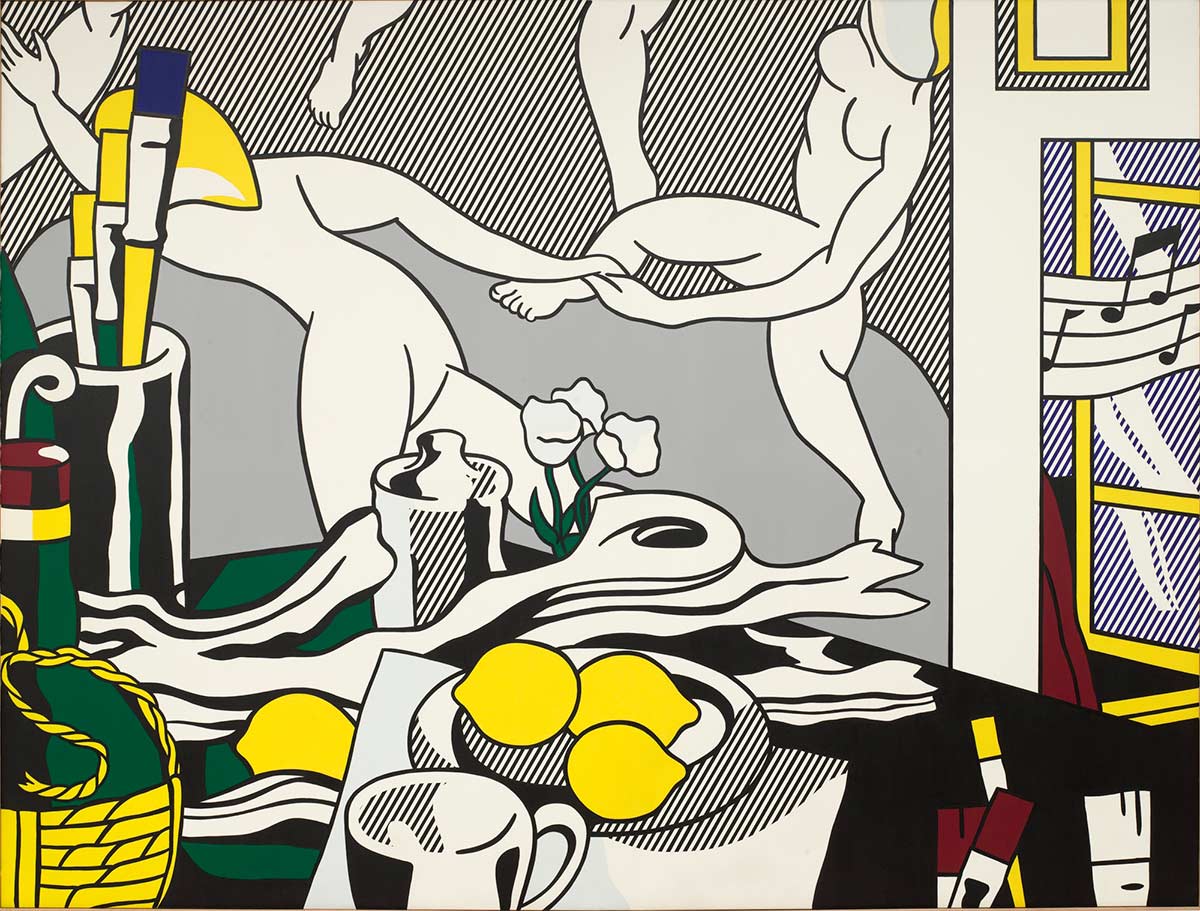
Artist’s Studio
“The Dance”, 1974.
Acrylic, oil, graphite pencil on canvas, 98 1/8 × 128 3/4in. (249.2 × 327 cm).
The Museum of Modern Art,
New York. Gift of Mr. and Mrs. S. I. Newhouse, Jr. ©
Estate of Roy Lichtenstein/DACS 2026 © The Museum
of Modern Art/Licensed by SCALA / Art Resource, NY
Roy Lichtenstein changed the way we see images. One of the defining artists of the Pop art movement, he turned the visual language of mass culture, comics, advertising, consumer goods, and commercial printing, into some of the most recognizable images of the twentieth century. His work looked cool, crisp, and machine-made, but was meticulously handmade, revealing an artist fascinated by how images are built, copied, enlarged, circulated, and made new.
Roy Lichtenstein: Like New offers a bold reconsideration of Lichtenstein for the present. Bringing together roughly 130 works made from the early 1940s through the 1990s, the exhibition traces how his early interest in perception and visual recognition shaped a career-long investigation into duplication, simulation, and image culture. Across painting, drawing, collage, prints, sculpture, and film, Lichtenstein treated images as unstable forms that could be borrowed, translated, reframed, and transformed.
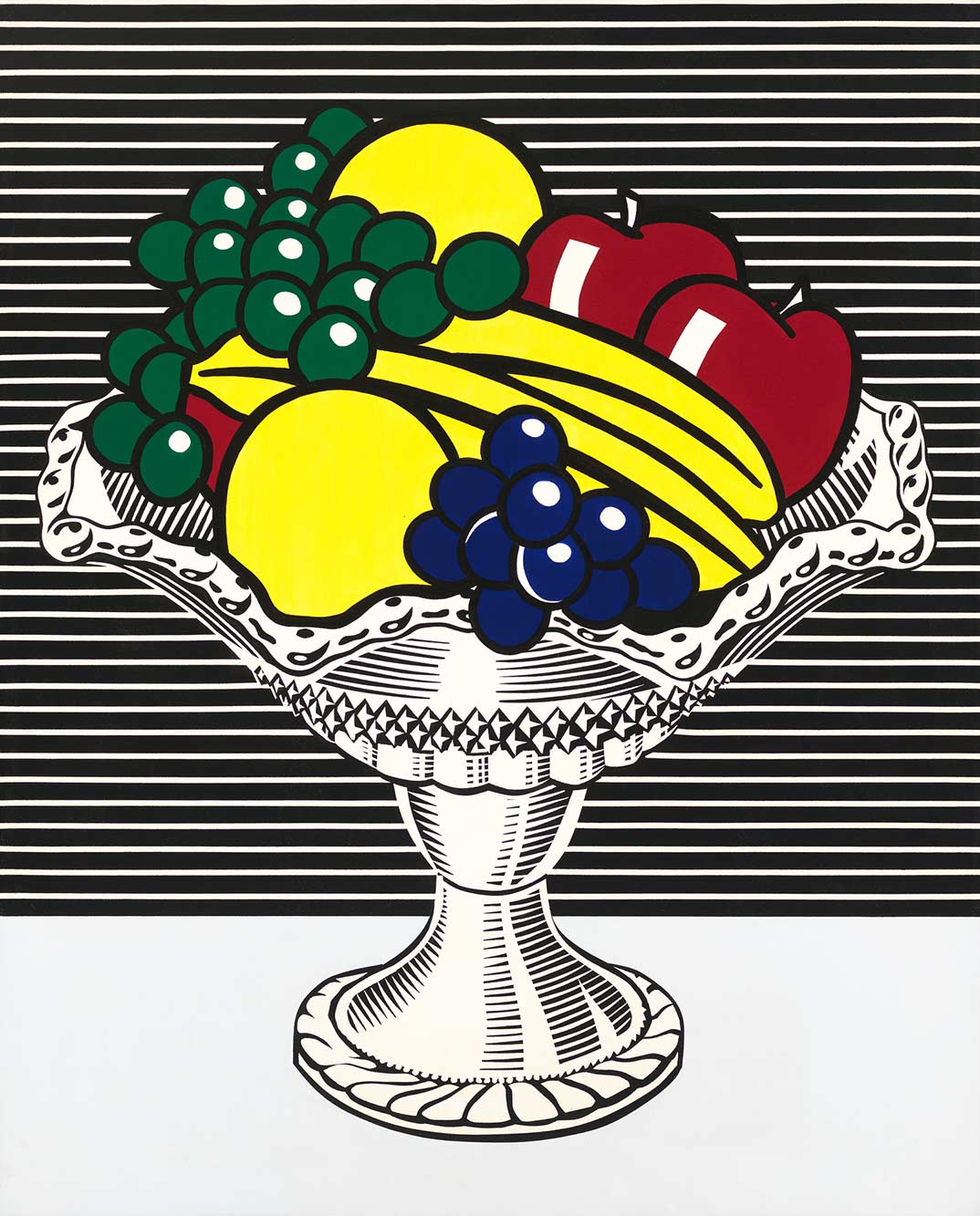
Still Life with Crystal
Bowl, 1972.
Oil and acrylic on canvas,
52 × 42 in. (132.1 × 106.7 cm).
Whitney Museum of American Art, New York; purchase with funds from Frances and
Sydney Lewis 77.64. © Estate of Roy Lichtenstein/DACS 2026
The exhibition features many of Lichtenstein’s most celebrated works, including Look Mickey (1961), Girl with Ball (1961), Masterpiece (1962), Drowning Girl (1963), Happy Tears (1964), Little Big Painting (1965), Rouen Cathedral, Set III (1968-69), and Artist’s Studio “The Dance” (1974). It also includes a recreation of three murals, including a nearly 96-foot-long iteration of Greene Street Mural (1983).
Roy Lichtenstein: Like New also reunites, for the first time, all the works from Lichtenstein’s first exhibition of Pop-style work at Leo Castelli Gallery in 1962. This pivotal moment for the artist would come to define an era, with its impact extended far beyond Pop, shaping generations of artists, including Louise Lawler, Richard Pettibone, and Sturtevant, whose work will also be on view in this exhibition and further illuminate Lichtenstein’s relationship to copying, influence, appropriation, and the afterlife of images.
In an era when pictures are endlessly cropped, filtered, reposted, and recirculated, Lichtenstein’s work feels newly urgent. Like New looks beyond the artist’s iconic surfaces to reveal the power and instability of images and celebrate an artist who understood, long before the digital age, that images change as they move through the world.
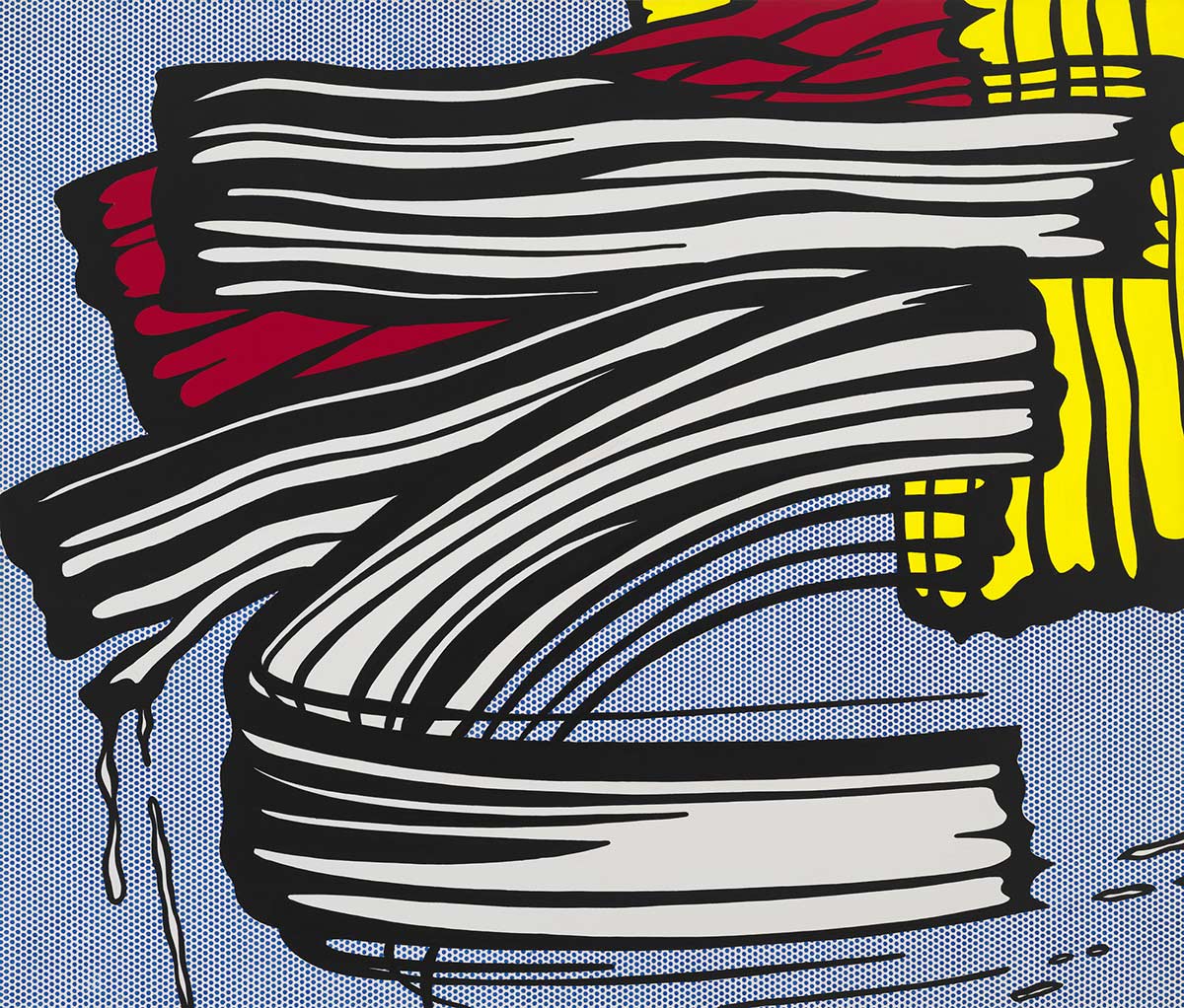
Little Big Painting, 1965.
Oil and acrylic on canvas,
68 × 80 in.
(172.7 × 203.2 cm).
Whitney Museum of American Art, New York;
purchase with funds from the Friends of the Whitney
Museum of American Art 66.2. © Estate of Roy
Lichtenstein/DACS 2026
Roy Lichtenstein: Like New is organized by Meg Onli, Nancy and Fred Poses Curator, and Alex Da Corte, Guest Curator, with Nakai Falcón, Curatorial Assistant, and David Crane, Curatorial Research Associate.
Leadership support for Roy Lichtenstein: Like New is provided by the Jerome L. Greene Foundation, Kenneth C. Griffin and Griffin Catalyst, and Susan and John Hess.
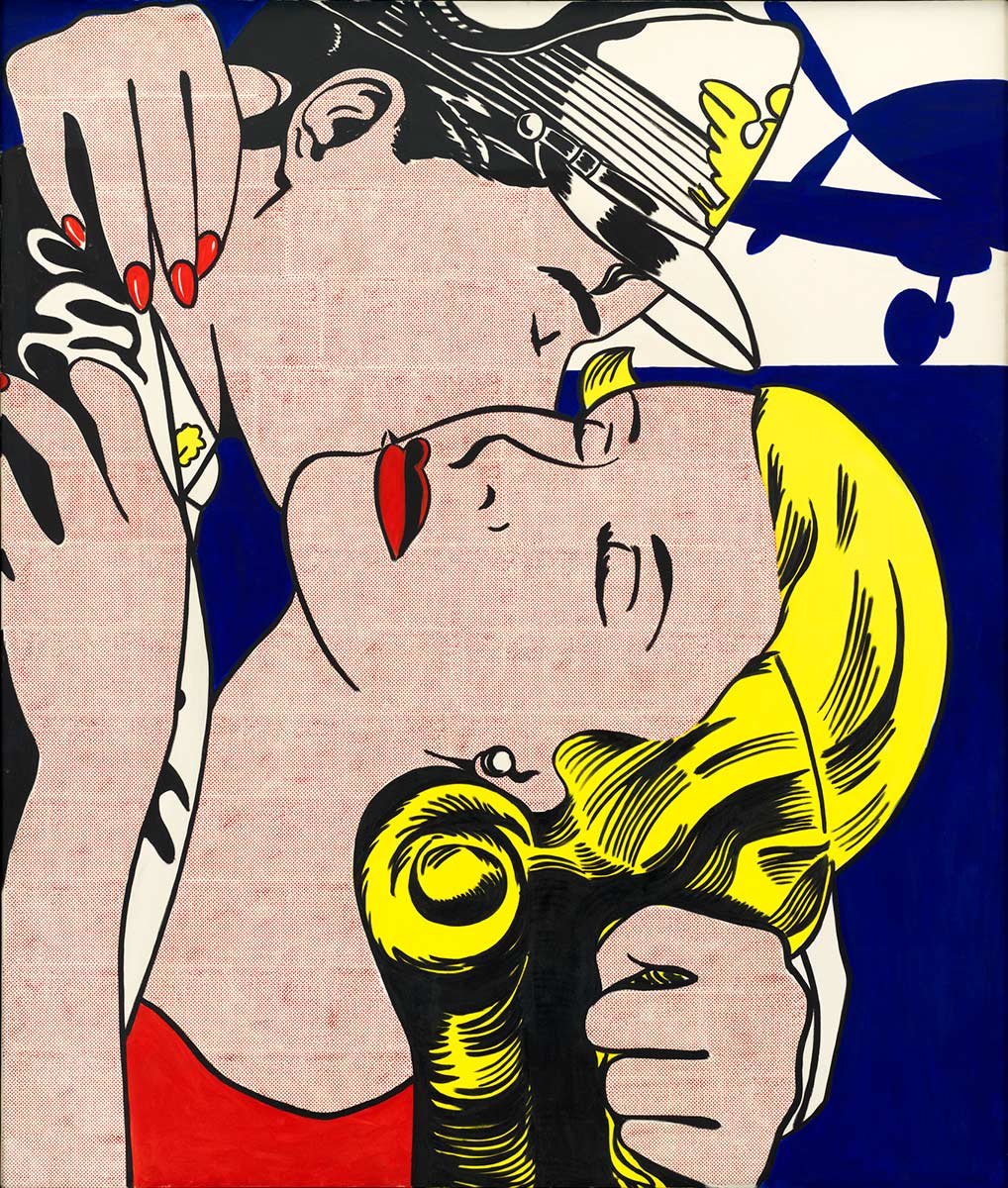
on canvas, 80 × 68 in. (203.2 × 172.7 cm). Private collection. © Estate of Roy Lichtenstein/DACS 2026
Roy Lichtenstein
1923–1997
Alongside Andy Warhol and James Rosenquist, Roy Lichtenstein was a key figure of Pop art, a movement that emerged in the early 1960s and was distinguished by subject matter derived from pop culture and the use, or imitation, of mechanical reproduction techniques such as screenprinting. Lichtenstein studied art briefly with the Social Realist painter Reginald Marsh at the Art Students League in New York, then at Ohio State University, where he earned his undergraduate and MFA degrees. In 1961, he arrived at his signature aesthetic: works whose subjects were loosely derived from comic strips, cartoons, or advertisements, painted in a style that mimicked commercial printing.
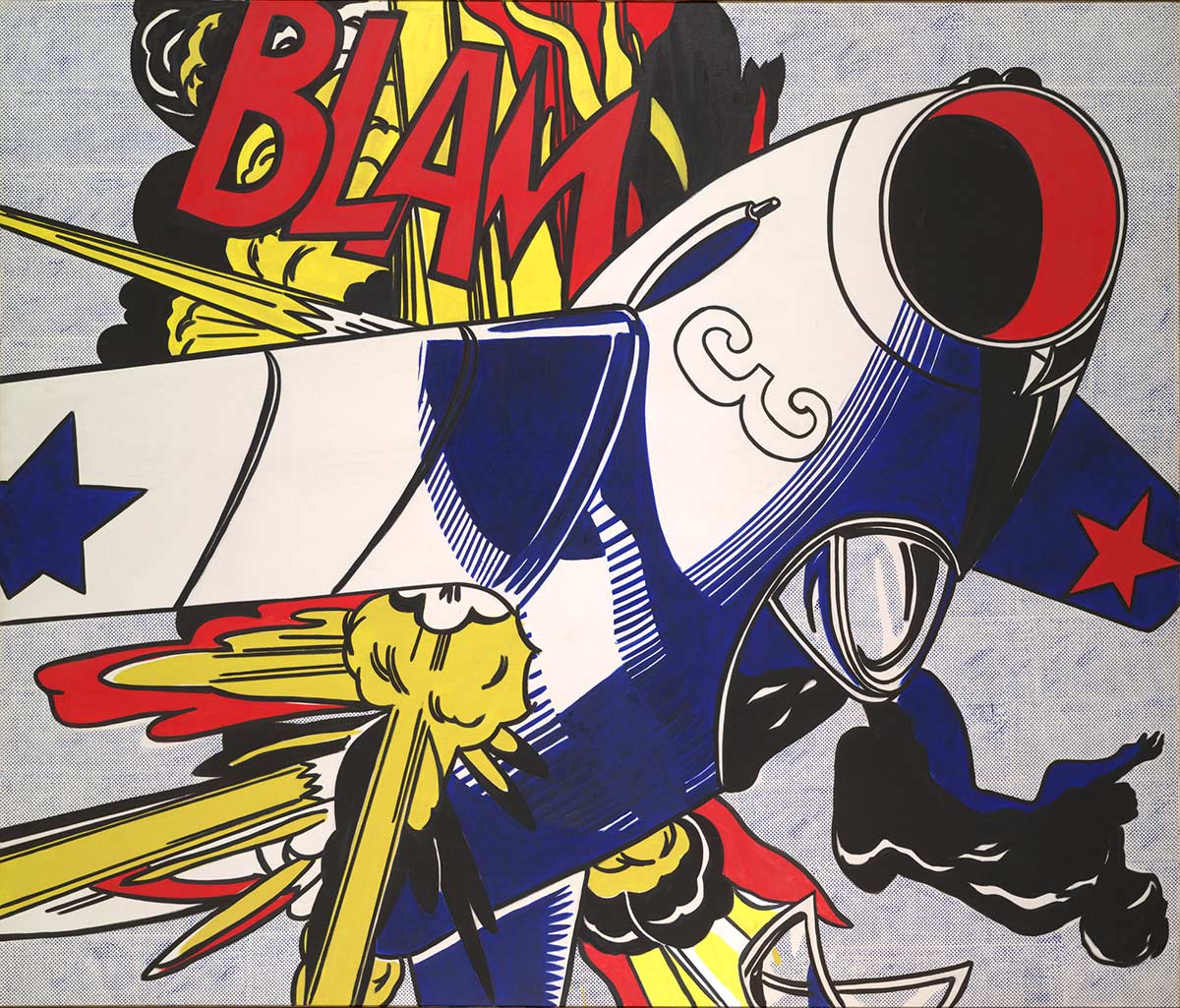
Blam, 1962 .
Oil on canvas,
68 × 80 in.
(172.7 × 203.2 cm) .
Yale University Art Gallery. ©
Estate of Roy Lichtenstein/DACS 2026
In Girl in Window, a study for a mural commissioned by the architect Philip Johnson for the New York State Pavilion at the 1964 World’s Fair, Lichtenstein represented the half figure of a comely female through a combination of simplified passages of solid color, bold black outlines, and areas of gridded dots.
Yet his technique is more labor-intensive and manual than his coolly detached surfaces—and their allusion to industrial reproduction—suggest. His process involved first sketching his selected subject, then projecting the drawing using an opaque projector, tracing the image onto canvas and, finally, filling in the outline with contours and dots, which were applied with a stencil to emulate the Ben-Day dots of halftone printing processes.
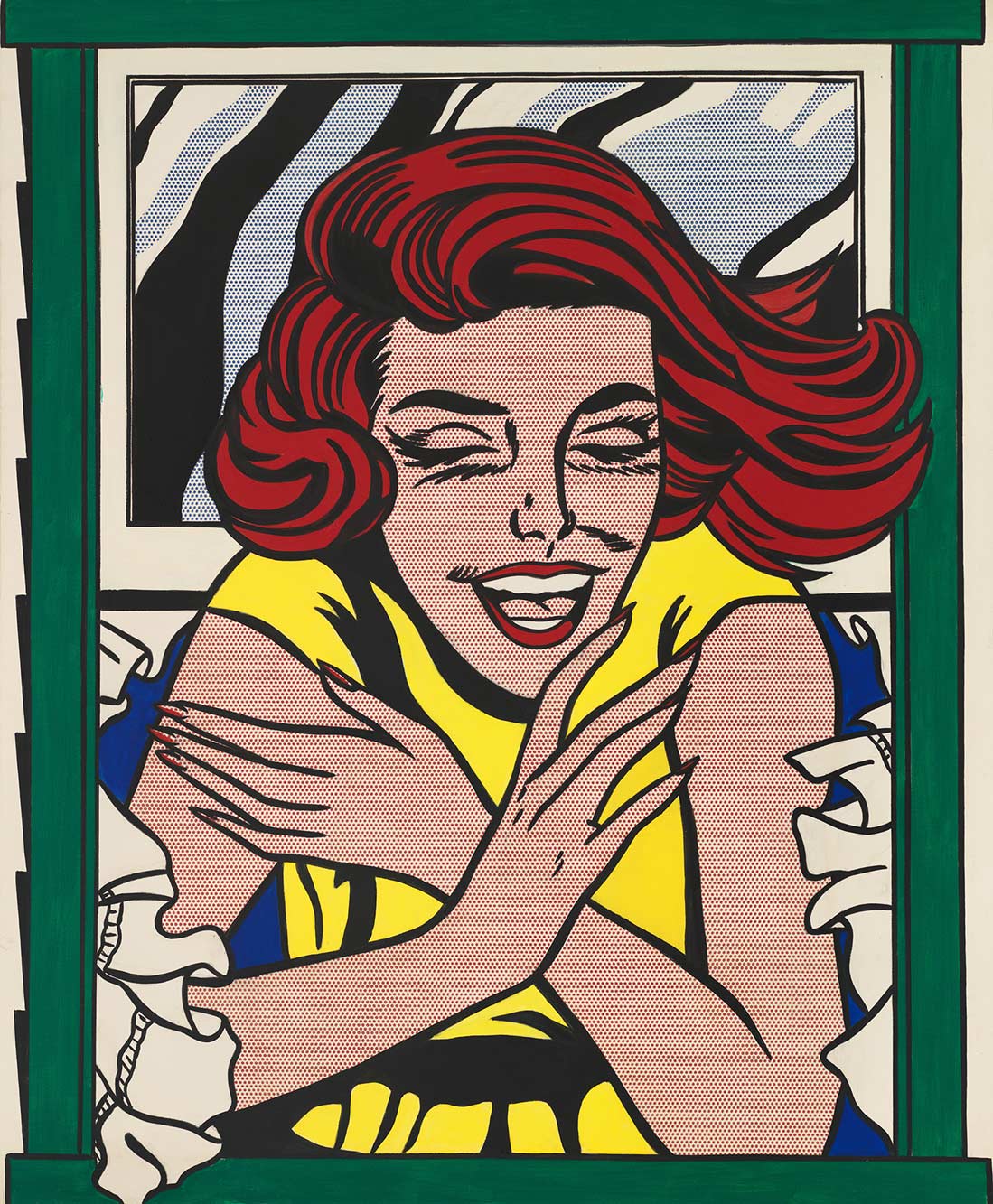
Girl in Window (Study for World’s Fair Mural), 1963.
Oil and acrylic on canvas,
68 1/8 × 56 in.
(173 × 142.2 cm).
Whitney Museum of American Art, New York; gift of The American Contemporary Art
Foundation, Inc., Leonard A. Lauder, President
2002.254. © Estate of Roy Lichtenstein/DACS 2026
About Girl in Window
Roy Lichtenstein drew his subject matter from a broad range of sources, including comic books, newspaper ads, and historical works of art.
Lichtenstein did not borrow these preexisting images outright, but translated them into his own idiom, “using those symbols to make something else,” as he put it. In 1963, architect Philip Johnson commissioned Lichtenstein to paint a panel for the New York State Pavilion at the 1964 World’s Fair in Flushing Meadows, New York.
Girl in Window is a study for the 20-foot mural, which was installed on the outside of Johnson’s circular Theaterama building. Executed in flat areas of color and Ben Day dots—a technique that mimics commercial printing and that marked his signature Pop style—Lichtenstein depicted the smiling girl as if she was emerging through an open window from inside the building.
In the mid-1960s, Lichtenstein began to take the artist’s mark itself as a motif: Little Big Painting pictures the slashing brushwork and drippy runoff that characterized many an Abstract Expressionist canvas. Lichtenstein parodies this means of improvisatory mark-making, and its associations with spontaneity and freedom, by rendering the strokes as if stylized and premeditated—substituting the look of anonymous commercial production for the uniqueness of the artist’s gesture.
Dana Miller and Adam D. Weinberg, Handbook of the Collection (New York: Whitney Museum of American Art, 2015), 230.
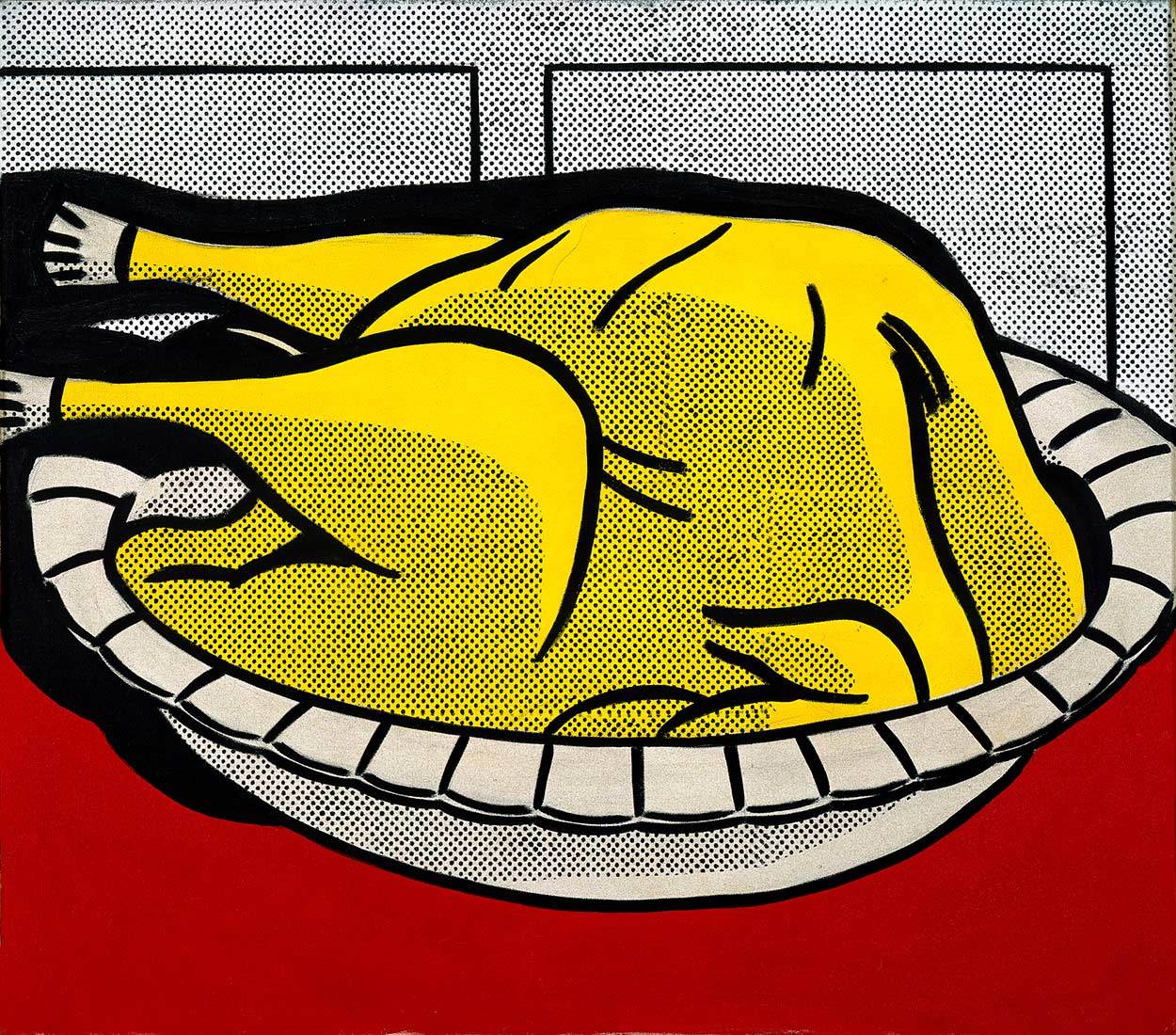
Turkey, 1961.
Oil, graphite pencil on
canvas, 26 × 30 in.
(66 × 76.2 cm).
Roy Lichtenstein
Estate. © Estate of Roy Lichtenstein/DACS 2026
VISITOR INFORMATION
The Whitney Museum of American Art is located at 99 Gansevoort Street between Washington and West Streets, New York City. Public hours are Monday, Wednesday, and Thursday, 10:30 am–6 pm; Friday, 10:30 am–10 pm; and Saturday and Sunday, 10:30 am–6 pm. Closed Tuesday.
Visitors twenty-five years and under and Whitney members: FREE. The Museum offers FREE admission and special programming for visitors of all ages every Friday evening from 5–10 pm and on the second Sunday of every month.
Website: whitney.org | INSTAGRAM: @whitneymuseum